THE CODE OF REFERENCES; A Watch's Identity Hides Between the Numbers
There's a moment every newcomer to watch collecting experiences sooner or later. Someone across from you stops saying "Submariner" and starts saying "126610LV." Not "Nautilus" but "5711/1A." Not "Royal Oak" but "15202ST." It feels like a private language. It is one. Luxury watch reference numbers are a fully functional encoding system, and understanding that system is the only way to make sense of why two watches with the same name on the dial can differ by $15,000 on the secondary market.
At some point in every collector's journey, this question becomes unavoidable. After that point, watches are never quite the same to look at.
Rolex: Six Digits, One Portrait
The fastest way to understand Rolex's reference system is to think of it as a portrait. Six digits followed by a letter code tell you everything about that watch — from case material to bezel color — in a single line. The system is built on French, the working language of Rolex's Geneva headquarters, which is why the letters trace back to French words.
The Submariner makes this clearest. The current black Submariner Date carries the reference 126610LN. The L stands for lunette, the French word for bezel. The N stands for noir, meaning black. That's it. Change the bezel to green and the reference becomes 126610LV — V for verte, French for green. The case is identical. The movement is identical. The proportions are identical. Only the bezel color changes. And yet on the secondary market, the gap between them runs into thousands of dollars. For someone who reads references, this makes complete sense. For someone who doesn't, it seems arbitrary. (read more on; Five things worth knowing before buying a pre-owned Rolex)
The same logic runs through the GMT-Master II line. The 126710BLRO — the "Pepsi" in collector shorthand — gets its name from the BLRO suffix: Bleu-Rouge, blue-red. The 126710BLNR is the "Batman," with a black-blue Cerachrom bezel: Bleu-Noir. Both sit among the most sought-after GMT references in the history of the model, yet their liquidity profiles, collector demographics and secondary market behavior diverge considerably. To someone reading the reference, these are two distinct conversations. To someone who isn't, they look like the same watch with a different color scheme.
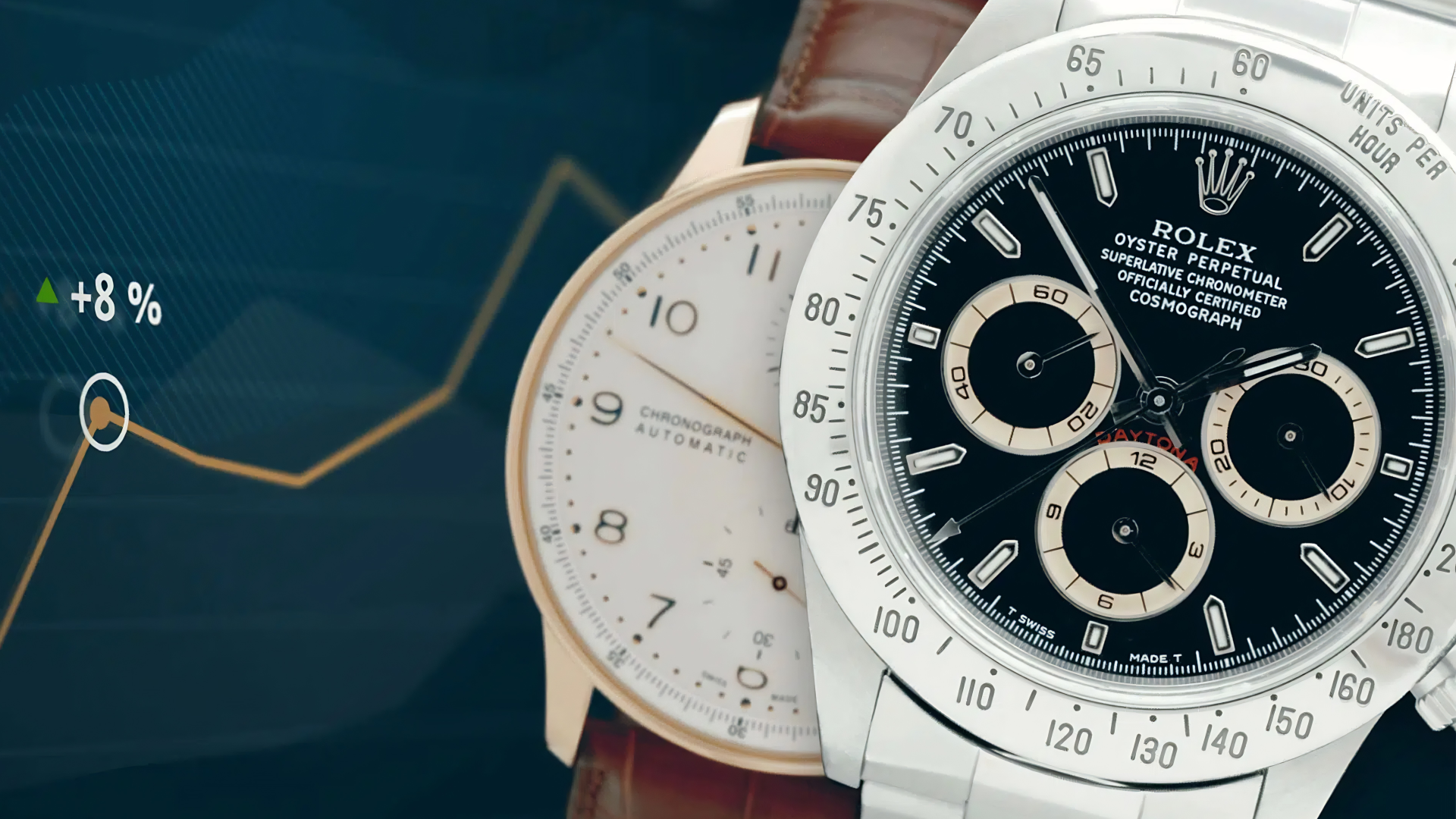
Then there's the Daytona. Reference 116500LN: stainless steel, black dial, black Cerachrom bezel. Waiting lists at authorized dealers still stretch into years. Secondary market prices sit comfortably above retail. (read more on; The history behind the number) Knowing the reference doesn't just tell you what the watch is — it tells you where it stands in the market.
Older Rolex references follow a different pattern. Four-digit references belong to the 1970s, five-digit references to the 1980s and 90s. For vintage collectors, these transitions are where things get genuinely interesting. The so-called "transition" references — where older components met newer case generations — carry a complexity that standard valuations rarely capture. Knowing which digits mark which generation is where the real reading begins.
Patek Philippe: The Story Starts After the Slash
The forward slash in a Patek Philippe reference number is one of the most overlooked details in watchmaking. What follows it is as important as the four digits that precede it.
Take 5711/1A-010. The 5711 identifies the Nautilus family. The /1 indicates a metal bracelet. The A comes from acier, the French word for steel. The -010 designates the second dial iteration of this configuration — the blue dial. Discontinued in 2021, this reference remains one of the most closely watched on the secondary market. Collectors know it simply as "the 5711," but understanding the full reference is the only way to know which version is actually being discussed.
Released the same year and immediately discontinued, the 5711/1A-014 carried a deep green dial. Three digits changed in the suffix. The collector demand, secondary market trajectory and pricing dynamics shifted entirely. Patek's letter codes for case materials follow a consistent logic: A for steel (acier), J for yellow gold (jaune), R for rose gold (rose), G for white gold (gris), P for platinum. Two letters side by side indicate a two-tone case — the 5711/1AR, for instance, combines steel and rose gold.
The first digit of a Patek reference also carries information. References beginning with 5 and 6 generally belong to men's models; those beginning with 7 are typically from the women's collection. The 7118 is therefore the women's Nautilus. Over the past five years, it has appreciated at roughly twice the rate of the overall market — quietly, without the media attention the 5711 attracted, which is precisely what makes it interesting. Collector circles have noticed.
The 5726/1A brings the Annual Calendar complication into Nautilus territory. The 5980/1A pairs it with a chronograph. Both represent the most technically complex branches of the Nautilus family, for those whose priorities extend beyond the dial.
Audemars Piguet: Five Digits Define the Family
In AP references, the first five digits identify both the model and the case size. That alone is enough to place a watch precisely within the catalog. The 15500ST is the current standard Royal Oak — 41mm, stainless steel, Petite Tapisserie dial. ST for stainless steel. Allocation from authorized dealers remains constrained; secondary market pricing holds above retail.
The 15202ST, by contrast, occupies a different tier in collector consciousness. Known as the "Jumbo," it was a 39mm watch powered by the ultra-thin Calibre 2121, with a Grande Tapisserie dial and no date complication. Production ended in 2022 alongside the 50th anniversary celebrations, and the reference now trades between $65,000 and $90,000 on the secondary market — up considerably from its retail price.
Its successor, the 16202ST, carries an updated Calibre 7121 with a longer power reserve while remaining faithful to the Jumbo's original proportions. And the 26320ST is the Royal Oak Chronograph, 41mm in steel — the most technically layered reference in the standard Royal Oak lineup, with secondary market demand that reflects its position.
Why the Reference Determines the Price
None of this is abstract. The reference number is a watch's identity card, and on the secondary market, identity is value. A discontinued reference commands a premium the moment production stops. A rare dial variant trades above the standard configuration. A transition-era Rolex attracts a different kind of collector attention than its successor. Understanding these dynamics requires reading the reference, not just the model name.(read more on; How Rolex, Patek Philippe and Audemars Piguet compare as investments)
Buying on the secondary market without this knowledge means making decisions without context. Knowing how to read a reference means having that context before the conversation even starts.
Reference Verification in Pre-Owned Buying
When buying a pre-owned watch, confirming the reference number is the first step in any authenticity process. On a Rolex, it's engraved between the lugs at 12 o'clock — not visible without removing the bracelet. On a Patek Philippe, it appears on the caseback. On an Audemars Piguet, it's found both on the case and on the warranty documentation.
Counterfeits typically either omit the reference entirely or carry a code that doesn't correspond to any legitimate configuration. On a genuine watch, the engraving is crisp and precise. On a fake, it's usually acid-etched and visibly softer. Cross-referencing the reference against manufacturer specifications is the most reliable early filter in any pre-owned assessment.(read more on; what Trusted Seller status actually means — is worth understanding before using the platform)
At Bless Luxury, the reference number is the starting point of every physical inspection. Before anything else is evaluated, the reference is confirmed against the movement, the case, and the documentation. No piece enters the collection without that check.
If you'd like to discuss a specific reference or explore what's currently available, the Akmerkez showroom is open for appointments. Reach us at +90 212 706 11 65 or info@blessluxury.com.
Frequently Asked Questions
- What is the difference between a reference number and a serial number?
A reference number identifies a model series — every watch in that configuration shares the same reference. A serial number is unique to a single watch, identifying that specific piece.
- What language are Rolex reference letters based on, and what do they mean?
The letters derive from French. L stands for lunette (bezel), N for noir (black), V for verte (green), B for bleu (blue), R for rouge (red).
- What does a Patek Philippe reference beginning with 5 or 7 indicate?
References beginning with 3, 5 or 6 generally belong to men's models; those beginning with 4 or 7 typically belong to the women's collection. The 7118 is therefore from the women's Nautilus line.
- Why do different references within the same collection carry such different prices?
Case material, dial variant, movement generation and production status all directly affect value. Discontinued references carry an additional scarcity premium that active-production models don't.
- Where do I find the reference number on a pre-owned watch?
On a Rolex, between the lugs at 12 o'clock, with the bracelet partially removed. On a Patek Philippe, on the caseback. On an Audemars Piguet, on the case and in the warranty documentation.


